 February 18,
2020. One of
our graduates,
Sammy Chalefac
Njukang,
has received a
Certificate of Acceptance to
publish his research paper
based on his final thesis that
he submitted at AIU. You can
find his published thesis,
“Electricity Generation,
Transmission, Distribution
and Utilization with Environmental
Sustainability and
Affordability” in the International
Journal of Scientific &
Engineering Research (IJSER).
Abstract: It seems to me that attention need to draw
now to governmental authority,
generating companies, scientific/
engineering communities
and to the entire human
race on the suffice of the earth
about the impacts of such
electrical generating sources
to environmental sustainability
and affordability.
In this project I will critically
analyze how generating
electricity from fusil-fuel had
been destructive to our environment
and how generating,
transmitting and utilizing
clean-green renewable electrical
energies, ... can help reduce
the effect of Global Warming and improve electricity generation,
transmission, distribution
and utilization with
environmental sustainability,
cheap and affordable energy.
Read his publication
here:
https://www.ijser.org/
onlineResearchPaperViewer.
aspx?Electrical-Power-Systemwith-
Environmental-sustainability.
pdf
Sammy Chalefac Njukang
has completed a Bachelor’s
program in Electrical Technology
at AIU.
February 18,
2020. One of
our graduates,
Sammy Chalefac
Njukang,
has received a
Certificate of Acceptance to
publish his research paper
based on his final thesis that
he submitted at AIU. You can
find his published thesis,
“Electricity Generation,
Transmission, Distribution
and Utilization with Environmental
Sustainability and
Affordability” in the International
Journal of Scientific &
Engineering Research (IJSER).
Abstract: It seems to me that attention need to draw
now to governmental authority,
generating companies, scientific/
engineering communities
and to the entire human
race on the suffice of the earth
about the impacts of such
electrical generating sources
to environmental sustainability
and affordability.
In this project I will critically
analyze how generating
electricity from fusil-fuel had
been destructive to our environment
and how generating,
transmitting and utilizing
clean-green renewable electrical
energies, ... can help reduce
the effect of Global Warming and improve electricity generation,
transmission, distribution
and utilization with
environmental sustainability,
cheap and affordable energy.
Read his publication
here:
https://www.ijser.org/
onlineResearchPaperViewer.
aspx?Electrical-Power-Systemwith-
Environmental-sustainability.
pdf
Sammy Chalefac Njukang
has completed a Bachelor’s
program in Electrical Technology
at AIU.
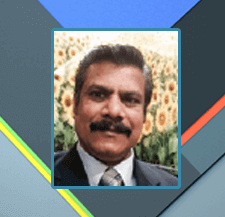 March 3,
2020. One of
our graduates,
Dr. Sivarajasingam
Mahendran,
was
privileged to be selected to
design and develop English
language texts at CEFR C1/2
levels for a premier training
centre in Singapore along with
a team of English Trainers for
Adult Literacy courses for the
Singapore Skills Futures (SSG)
under the purview of the British
Council. Unlike previous
language learning texts, grammar
and vocabulary are now
the mainstays where language is “taught rather than caught
in teaching” as compared with
previous course materials
which had used the CASAS
standards. More info regarding
CEFR:
https://www.youtube.com/watch?v=UAehOcVfr3Y&trk=publicpost_share-video-embed_sharearticle_title
Dr. Siva has completed a
Doctorate program in Education
at AIU
March 3,
2020. One of
our graduates,
Dr. Sivarajasingam
Mahendran,
was
privileged to be selected to
design and develop English
language texts at CEFR C1/2
levels for a premier training
centre in Singapore along with
a team of English Trainers for
Adult Literacy courses for the
Singapore Skills Futures (SSG)
under the purview of the British
Council. Unlike previous
language learning texts, grammar
and vocabulary are now
the mainstays where language is “taught rather than caught
in teaching” as compared with
previous course materials
which had used the CASAS
standards. More info regarding
CEFR:
https://www.youtube.com/watch?v=UAehOcVfr3Y&trk=publicpost_share-video-embed_sharearticle_title
Dr. Siva has completed a
Doctorate program in Education
at AIU
 February
25, 2020.
One of our
graduates,
Hassan
Elsan Mansaray,
published the article
“Factors that would argue in
favour and against the introduction
of HRM in the public
sector: A retrospective study”
in the International Journal of
Human Resource Studies.
Abstract: This study
critically discusses the argument
for and against the establishment of HRM in the
public sector and the challenges
faced in terms of staff
motivation, cultural change
of tenure of office of public
servants and downsizing of
staff. The study found that the
development was slanted by a
variety of reasons, comprising
amplified competitive pressures
triggered by deregulation
and globalization, and the
inspiration of distinguished
scholars in the US and the UK.
The aim is to provide chances
for a new type of analysis callthe new industrial relations.
Read his published article
here:
http://www.macrothink.
org/journal/index.php/ijhrs/
article/download/15881/12413
On March 15, Hassan published
another article: “Relating
Marketing and Corporate
Strategy- An Overview”, in
the International Journal of
Innovative Studies in Sciences
and Engineering Technology
(IJISSET) in 2019 Volume 5
Issue 11.
Abstract: This paper attempted
to establish the link between marketing and corporate
strategy. Since marketing
means a lot of things nowadays,
like dealing with markets
and, any action that can
promote sales, there is need
for any organization to take a
closed reflection of the markets
and the capacity to put
itself in its customers’ place
and provide the available
cherished information needed
by these customers. As, the
purpose of marketing is to
influence the target customer
that can support the business. For this reason, transactional
and relationship marketing
approaches are those approaches
among others that
are currently becoming more
widely used in order to influence
customers to support the
business.
Read his article
here: http://
ijisset.org/wp-content/uploads/
2019/11/IJISSET-051028.pdf
Hassan Elsan Mansaray has
completed a Doctorate program
in International Management
at Atlantic International
University.
February
25, 2020.
One of our
graduates,
Hassan
Elsan Mansaray,
published the article
“Factors that would argue in
favour and against the introduction
of HRM in the public
sector: A retrospective study”
in the International Journal of
Human Resource Studies.
Abstract: This study
critically discusses the argument
for and against the establishment of HRM in the
public sector and the challenges
faced in terms of staff
motivation, cultural change
of tenure of office of public
servants and downsizing of
staff. The study found that the
development was slanted by a
variety of reasons, comprising
amplified competitive pressures
triggered by deregulation
and globalization, and the
inspiration of distinguished
scholars in the US and the UK.
The aim is to provide chances
for a new type of analysis callthe new industrial relations.
Read his published article
here:
http://www.macrothink.
org/journal/index.php/ijhrs/
article/download/15881/12413
On March 15, Hassan published
another article: “Relating
Marketing and Corporate
Strategy- An Overview”, in
the International Journal of
Innovative Studies in Sciences
and Engineering Technology
(IJISSET) in 2019 Volume 5
Issue 11.
Abstract: This paper attempted
to establish the link between marketing and corporate
strategy. Since marketing
means a lot of things nowadays,
like dealing with markets
and, any action that can
promote sales, there is need
for any organization to take a
closed reflection of the markets
and the capacity to put
itself in its customers’ place
and provide the available
cherished information needed
by these customers. As, the
purpose of marketing is to
influence the target customer
that can support the business. For this reason, transactional
and relationship marketing
approaches are those approaches
among others that
are currently becoming more
widely used in order to influence
customers to support the
business.
Read his article
here: http://
ijisset.org/wp-content/uploads/
2019/11/IJISSET-051028.pdf
Hassan Elsan Mansaray has
completed a Doctorate program
in International Management
at Atlantic International
University.

| António Da Silva Feijó Júnior Master of Science Strategic Management Angola |
João Filipe Mavungo Massiala Bachelor of Science Environmental Science Angola |
López Rosen, Mariana Bachelor of Science Psychology Argentina |
Maximiliano Ricardo Alonso Doctor of Philosophy Economics Belgium |
Luis Santos Laura Flores Bachelor of Science Chemical Engineering Bolivia |
Kazungu Jean-Claude Bachelor of Human Resource Management Business and Administration Burundi |
| Sunday Nwaeze Odii Doctor of Business Administration Business Administration Canada |
José Henrique Mendes Moreira Master of Education Policies and Legislation Cape Verde |
Florent Bertrand Zaïne Doctor of Philosophy English Literature Central African Republic |
Mauricio Rojas Carrillo Doctor of Business Administration Business Administration Colombia |
Atika Bajibhai Bachelor of Education Early Childhood Education Congo |
Ramona Keiry Germosen De La Cruz Bachelor of International Relations Strategic Management Dominican Republic |
| Julio Jesús Oliva Ibarra Doctor of Literature Spanish Language and Literature Dominican Republic |
Cristian Rafael Víctor Gómez Master of Business Administration Marketing Dominican Republic |
John Kwamevi Cudjoe Doctor of Science Psy. and Counseling in Addiction and Violence Ecuador |
Ana Carolina Jaramillo Ortiz Master of Psychology Family Psychology Ecuador |
Salvador-Nguema Esono Mangue Nkili Bachelor of Science Industrial Psychology Equatorial Guinea |
Joachim Marthinus Van Stryp Doctor of Philosophy Management Eswatini |
| Prince Aribodor Suleiman Onwuli Bachelor of Legal Studies International Legal Studies Ghana |
George Yaw Segnitome Doctor of Public Health Community Public Health Ghana |
Flor de Rocio Aguirre Pineda Bachelor of Business Administration Business and Economics Guatemala |
Mario Estuardo Martínez Rodas Bachelor of Business Administration Business Administration Guatemala |
Jairam Ramjeawan Bachelor of Business and Economics Economics Guyana |
Francisco Antonio Galdámez Torres Bachelor of Business Management Entrepreneurial Management Honduras |
| Feda Kabalan Mahfouz Bachelor of Business and Economics Management Kuwait |
Maria De Los Angeles Diaz Nieto Bachelor of Pedagogy Pedagogy Mexico |
Felipe Angel Acosta Ramirez Certificate of Science Electrical Industrial Maintenance Mexico |
Abayomi Olofin Bachelor of Science Information Systems Nigeria |
Kofoworola Abimbola Popoola Doctor of Philosophy Civil Engineering Nigeria |
Elizabeth Ishaku Certificate of Public Health Public Health Nigeria |
| Mukuru Ssessazi Alfred Doctor of Philosophy Computer Science Rwanda |
Mafiga Gerard Master of Sciences Tourism Management Rwanda |
Shazia Zaheer Doctor of English Literature and Linguistics English Literature and Linguistics Saudi Arabia |
Algethami, Mansour Faisal M Bachelor of Science Safety Engineering Saudi Arabia |
Hassan Elsan Mansaray Doctor of Philosophy International Management Sierra Leone |
Boon Hong Lim Doctor of Philosophy Nutritional Science Singapore |
| Carlos Daniel Garcia Bermudez Bachelor of Physical Education Physical Education United Arab Emirates |
Tanya Knowles Bachelor of Business Administration Business Administration USA |
Victor Mba Micha Avomo Bachelor of Communications Communications USA |
Cecilia Mendez Miranda Bachelor of Communications Film and Audio Visual Production USA |
Lázaro Daniel González Valdés Bachelor of Science Psychology USA |
Coleen Chang Certificate of Business Administration Business Management and Marketing USA |
| Mohammed Addum Musa Mohammed Master of Science Rural Development Yemen |
Nsemukila Fwambo Certificate of Science Chemistry Zambia |
||||

 Juvénal Nsengiyumva
 Christian Ababio Jnr.
 John Kwaku Boakye

It is further noted that often
gifted children may experience
antagonism from their
Teachers due to a misunderstanding
of their behavior.
It is important to recognise
that the evidencing of
giftedness is part of a developmental
process and
different characteristics will
be exhibited at different times
and in different contexts.
Moltzen (2011) defines “The
view of giftedness as developing
potential, rather than
fixed ability, has significant
implications for parents and
educators. From this position,
who is and who is not gifted is
not of major consequence and
ascribing the label “gifted” to a
dedicated group (and nongifted
to the others) becomes
less of an issue. The focus is
more of providing maximum
opportunities for gifted behaviours
to emerge, as well as an
appropriate environment for
expertise to develop”.
Lewis Terma and Leta Hollingsworth
(1925) found out
that modern intelligence tests
have roots in America, were
identified primarily on basis of
performance in and out of the
school. In 1980, American psychologist,
James Catell, called
for the development of a test
that would measure the mental
ability of gifted children which
earned him the title of “Father
of the Gifted Movement” Some children are highly
gifted in areas such as math,
writing or music. Then there
are those with challenges
that affect learning: They
could have ADHD, dyslexia or
dyscalculia, or perhaps they’re
autistic or have sensory processing
issues. But there are
also kids who fit both categories.
They are called twice-exceptional,
or 2e, which means
that they have exceptional
ability and disability. They are
gifted in some way but they
also face learning or developmental
challenges. (Arky, 2016)
Children who are both
gifted and challenged can be
difficult to understand. Gifted
kids can use their strengths
to compensate for the special
need, and in the process mask
their learning problems. Or
the special needs can mask
the giftedness. In some cases,
neither the disability nor the
giftedness is recognized.
Once 2e kids are identified,
it can still be difficult to
get the support these children
need in school. If they’re in a
gifted program, they may be
floundering in a certain area. If
they’re placed in a special-ed
program, it may not challenge
them, and they may be frustrated
and restless.
In either
case, anxiety, depression, a
lack of self-esteem and emotional
dysregulation can result,
leading to behavior problems.
They may come off as lazy
because they’re clearly bright
but performing poorly in some
areas. They may get a lot of
criticism from parents and
teachers: “You’re just not trying
on this math!” Their selfesteem
suffers and they may
experience depression.
Or they seem oppositional
to teachers and parents. “Frustrated
by their difficulties,
they act out in infinite ways,
and they get mischaracterized
or misunderstood as being
argumentative.
Psychologist James T Webb
states that the one of the
things we know about gifted
children almost universally
is that they are intense. This
intensity can make sitting in
a regular classroom very frustrating.
The research indicates
that for most gifted children,
from one fourth to one half
the regular classroom time
is spent waiting for others to
catch up. If you’re sitting there
and your mind is intensely
churning, you’re likely to be
seen as being off task, fidgety,
interrupting others, classic behaviors
that would be ADHDlike.
(Webb et al., 2016)
According to the National
Association for Gifted Children
(2019), students who
have both gifted and learning
difficulties require an
intervention program that
nurtures the gifts and talents.
which accommodates learning
weaknesses. Talented
learners require a supportive
environment that values and
appreciate individual abilities.
A learner who is gifted and
talented usually does much
better than learners of the
same age group and hence
requires services or activities
not ordinarily provided for the
ordinary learner.
The National Association for
Gifted Children (2019), identifies
that good instruction for
gifted learners involve:
• They need learning experiences
that are organized by
key concepts and principles
of a discipline rather than
by facts. They need content
that is relevant to their lives,
activities that cause them to
process important ideas at a
high level, and products that
cause them to grapple with
meaningful problems and
pose defensible solutions.
• Learning needs to be paced
in response to the student’s
individual needs. As gifted
learners learn at a more
rapid pace than their peers,
they need to be educated at
an accelerated rate.
• Good teaching for gifted
learners requires an understanding
of “supported
risk.” Highly able learners
often make very good
grades with relative ease for
a long time in school. They
see themselves (and often
rightly so) as expected to
make “As,” get right answers,
and lead the way. In other
words, they succeed without
“normal” encounters with failure. Then, when a teacher
presents a high-challenge
task, the student feels
threatened. Not only has he
or she likely not learned to
study hard, take risks and
strive, but the student’s
image is threatened as well.
A good teacher of gifted
students understands that
dynamic, and thus invites,
cajoles and insists on riskbut
in a way that supports
success. In a study (Watve, 2008) of 53
men between the ages of 30
and 40 years, Watve examined
the effects of enriched
educational programs during
childhood on academic
(educational qualifications,
acquisition of languages,
literature published, etc.),
practical (occupational status,
income, material-possessions,
etc.), and social (leadership
performed, special recognitions
achieved, membership of groups, etc.) accomplishments
during adulthood. Comparison
was made between those
men who had participated in 6
years of enriched educational
programs during childhood
and those equally able men
who had not participated in
enriched educational programs
during childhood.
Watve found that those men
who participated in enriched
educational programs during
childhood were more likely
than those who had not to
have academic and social accomplishments,
specifically (a)
to achieve basic educational
qualifications, (b) to acquire additional qualifications in
addition to basic educational
qualifications, (c) to become
members of social groups, (d)
to conduct training programs,
and (e) to deliver talks outside
of their academic area.
It was noted that acceleration
and enrichment, during
childhood and adolescence,
seem to contribute to productivity,
achievement, and
excellence during adulthood
(Watve, 2008). This is consistent
with recommendations
from the National Association
for Gifted Children, who
maintain that to educate all of
our children and allow them to
compete in a global economy
in all fields of human endeavor,
the nation must provide an
environment in which gifted
and talented students, along
with all our children, can
reach their full potential. ... To
do otherwise is to shortchange
a significant segment of the
K-12 population that deserves
an appropriate education and
can make important contributions
to our society. (“NAGC
Position Statements & White
Papers | National Association
for Gifted Children”, 2020)
A discussion of the childhood
experiences of gifted
adults leads us to the characteristics,
experiences, and
needs of gifted individuals during adulthood. Several
researchers discuss anecdotal
and observational experiences
with gifted adults and describe
characteristics of these gifted
adults that set them apart from
their average ability peers.
Lovecky (1986) outlines the
following traits of gifted adults:
divergent thinking, excitability,
sensitivity, perceptivity,
and entelechy (i.e., having a
goal). Roeper (1991) explains
gifted adults have the following
characteristics, among others:
complex intellectual ability,
childlike emotions, feelings of
being fundamentally different
from others, driven by their
giftedness, feelings of being
overwhelmed by their own
creativity, introversion, need
for solitude, need for meaning,
individualized methods
of learning, able to see patterns
of development and
growth (trends), need for truth,
perfectionism, feelings of being
misunderstood, difficulty
in understanding the behaviors
of others, strong sense of
humor, difficulty with authority
figures, and strong moral
convictions. Tolan (1994) also
discusses similar characteristics:
emotional intensity, moral
sensitivity and concern for
justice, and social experiences
that depend on finding likeminded
others. The end

Coronavirus, namely severe
acute respiratory syndrome
coronavirus 2 (SARSCoV-
2) is responsible for coronavirus
disease (COVID-19).
Coronavirus is emerged in the
city of Wuhan, China, in 2019
and has since caused a large
scale COVID-19 epidemic and
spread to more than 184 other
countries is the product of
natural evolution.
There is a controversial
debate on origin of this this
dangerous virus. Some people
convicted the Wuhan Institute
of Virology in Wuhan, China
for spreading this virus in outside.
But there is no scientific
evidence of this controversial
blame. Genomic structure
(genetic sequence) revealed
that this virus is 96% similar to
one that circulates in bat. So, it
can be assumed that the SARSCoV-
2 virus originated in bats
and then jumped to humans,
perhaps through other animals.
If we end debate on how
it got into the human body,
we will see severe outbreak
of this virus induced disease
(COVID-19) since December
2019. As of March 19, 2020
globally 234,073 persons were
infected. Out of these, 9,840
died (WHO). Worse scenarios
were identified in Italy with
41,035 confirmed cases with
3,407 death tolls. After that
Chinese casualties were high
with 81,300 confirmed cases
and 3,253 death tolls.
Even though these casualties
were originated in China
but these spread beyond
nation boundary. Due to
modernized fast communication
and necessity of human
mobility, these viral disease
was transmitted over 185
countries around the globe in
just 60 days.
Initially, these viral disease
was local environmental
issue in the city of Wuhan,
China. The virus got transmitted
through environmental
contact —coughing, sneezing,
touching by the infected people.
Some people got infected
through air born viral particles
in the local environment.
The result of these infections
caused severe social
problems. The vulnerable
risk groups together with the
infected people were compelled
to stay in institutional
and home quarantine over
long time. These people did
not even live with adequate
life needs. This caused further
physiological and psychological
problems to the vulnerable
classes.
The obvious results of these
environmental and social
problems by COVID-19 epidemic
caused negative impact
on economy. To cut outbreak
of this infectious COVID-19
epidemic, worldwide communication
became paralyzed.
Vulnerable countries
lock down their geographical
boundaries, suspended land,
water and air communications
and advised their people not
to communicate in and out of
the country concerned. These
caused complete breakdown
of local, regional and global
supply chain. If this continues
over long time, there will be
scarcity of necessary commodities.
Effect of this will be
revealed in raise in commodity price. Sooner or later the vulnerable
people will need to
spend more money to buy
their necessary commodities.
Ultimately, this will affect
the local, regional and global
economy. It will not be unlikely
to see another global recession
similar to late 2000s. This will
have wide spread impact in
individual, collective, national,
regional and global levels.
More people will lose their
jobs, value price will go up,
individual, collective, national,
regional and global trade will
shrink. If these happen, there
will be severe individual, collective,
national, regional and
global economic crisis.
This will disrupt three
pillars of environmental
sustainability:
• Ecology (environment)
• Economy
• Society
We do not want to happen
this due to COVID-19 epidemic
crisis. We want to maintain
the contemporary global
environmental sustainability
by acting pro-actively and by
resisting negative impacts of
the COVID-19 epidemic.
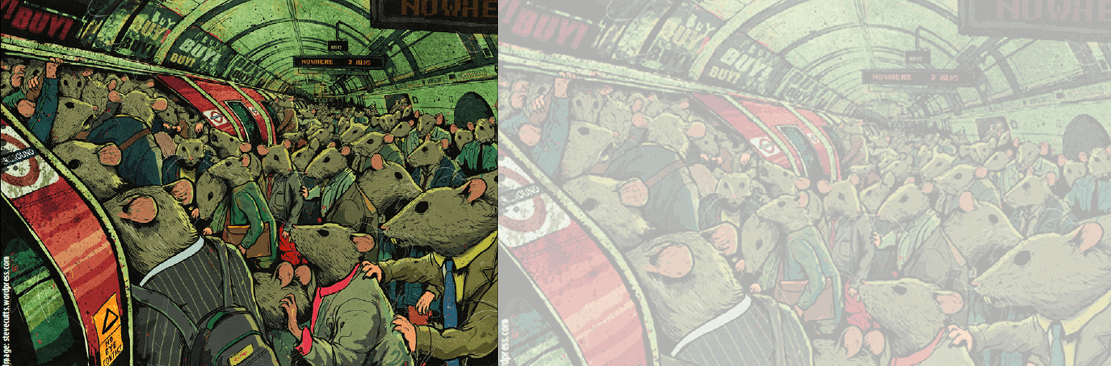
With the latest globalization,
it seems that the
concept we have been bringing
in since the Renaissance
is very present: human beings
are the maximum of creation.
With the Renaissance
begins the development of the
arts, of the sciences and in the
times in which we are living
the technology, and with it, everything
that any human being
can imagine.
We are living so
many things that many times
we don’t know how to identify
what we are doing.
According to Morin: “Let us
remember once again that each
one lives a plurality of lives,
their own life, the life of their
own, the life of their society,
the life of humanity, the life of
life”. (Morin, 2011, p. 87)
We live so many lives that
we need to know if we really
have space for our own live.
Society at all levels is looking
for progress.
People only have time to
work because they say they are happy when they buy everything
that can be sold.
The vast majority of human
beings, if not all of them,
expect to have a life with
everything that can be bought
and say that they achieved the
desired progress.
A life where progress was
achieved is because it was in
one place in terms of material
goods and now it is in another
place of more goods.
This endless race has found
answers for some, who in the
anguish of unlimited goods,
saw that progress understood
in that way is a career that
never ends.
Morin says: “We have lost
the promise of progress, but it
is a very great progress, finally,
to discover that progress was a
myth”. (Morin, 2011, p. 71)
It is a myth because you
never reach what you are
looking for. It is one thing to
not have the necessary goods
for a decent life and want
to overcome that stage and
another is to find no limit in
this world.
Science advances and advances
but the great paradox
is that we do and do science
and we have many goods, we work and work and the world
we are living in seems to be
going in the opposite direction
to well-being.
Our planet, the only place
where life is possible, protests
and protests for all the
resources we use to make
products and products that are
often not necessary.
We are about whether they
are renewable resources or
not. We are in that it is necessary
to eliminate here and
there to build life and more
artificial life.
Those who benefit from this
crazy race say that there is
no such climate change, that
resources taken in that way
are necessary.
This is the beautiful pale
blue dot of Carl Sagan.
Now we are going to see
the life of the beings that live
on that planet: they run here
and there and every day the
tension in which they live
increases because they have to
work harder and harder to say
they are successful.
Where is human life going? If
you don’t buy everything that
exists, people say they are poor.
“The Globalization of our
days, like previous globalizations,
has witnessed increasing
prosperity as well as increasing
inequality”. (Deaton,
2015, p. 21)
The crazy race in which
today’s society lives must stop
for the health of every human
being. Globalizations bring
poverty along with the wealth
of others because all countries
cannot change the process of
production and distribution
of goods as easily as countries
that consider themselves rich.
“Almost 1,000 million live in
material poverty; millions of
children die from the accident
of being born in a poor country…”.
(Deaton, 2015, p. 297)
The infrastructure that
needs to be built, to generate
global change, another
globalization, costs money
and all governments do not
have it; all employees must
also be trained so that they
can execute the expected
innovations.
The true poor are those
described by Deaton: “It is
easy to think of the escape
from poverty as something
related to money: with the
possibility of having more
and not having to live with
the stormy anxiety of not
knowing if there will be enough tomorrow...”. (Deaton,
2015, p. 15)
According to Deaton, poverty
is also the lack of health
services, the lack of food, an
adequate living space, freedom
and education.
“...when I talk about freedom
I mean freedom to live a new
life and to do the things that
make life worth living…”. (Deaton,
2015, p. 18)
Poverty is more than money
but one thing is to live as Deaton
says and another thing is
to live in superabundance.
The change in the treatment
we give to our planet is urgent,
as is the change in the way we
live. We have to learn to enjoy
the life we have and stop living
in it later. We have to think
about what Morin says:
“You have to know how to
enjoy the present to love the
future”. (Morin, 2011, p. 88)
What to do to get out of the
way we treat the only place
where life is possible for us
and enjoy what we do?
According to Deaton: “The
keys to progress are new
knowledge, new inventions
and new ways of doing things.”
(Deaton, 2015, p. 26)
Knowledge is at the crossroads:
it is done for good and it
is done to generate harm.
The new knowledge has to
be to generate solutions to the
life of the planet and to the life
of human beings.
An aim is always sought
in every investigation for the
benefit of a community, a nation
or the world society.
The new inventions must be
for the same: quality of life of
the planet and human beings.
Stop creating weapons and
more weapons to say that we
live in peace.
It seems that the race in
arms production is to have
two more world wars: we arm
ourselves for war but we live
in peace. The new ways of
doing things implies time to
solve the problems we have
as humanity. Also produce to
solve our problems instead of
producing to earn money.
We can change the treatment
we give to our home,
to our beloved planet and to
the crazy race we carry as
humanity.
Now we must add the anguish
of the spread of a virus:
we do a lot of science, we
manufacture many products
but we are object to what a
very small being wants to do; a
virus that brings everyone depending
on its spread. Faced
with so much science and so
much money we are depending
on that little being that can
do us a lot of harm.There is the
fragility of the human species.
Let’s look for true progress;
to create an inclusive society.
Let us seek progress in a life
that means opportunities and
spiritual wealth for all.
Let us seek progress in a
way of living life where we
have time to be human beings
and not beings for production.
Let’s look for progress in
having time to enjoy everything
we do instead of seeing
work as a way to earn money.
As humanity we can have a
quality life that is to be happy
because we do what we like,
and what we like allows us to
have a dignified life, with the
immense satisfaction of being
human beings who build the
world we need as a species.
Hands-on work, we can.
BIBLIOGRAPHY. Deaton, A. (2015). El Gran Escape. Salud, riqueza y los orígenes de la desigualdad.
México: FCE. | Morin, E. (2011). ¿Hacia dónde va el mundo? Barcelona: Paidós | Sagan, Carl.
(2003). El Punto azul Pálido, una visión del futuro humano en el espacio. México: Planeta.
At AIU, we seek to break paradigms
with creative innovation.
During my doctoral studies at AIU, I
researched Effective Demand in economics.
I developed various unique
and new equations. One such equation
was to calculate the output gap
for an economy.
The output gap is defined as the
difference between real output and
potential output. The gap (difference)
between potential output and real output
is important, because it will tell you
how much more room your economy
has to grow. The equation is to subtract
potential output from real output.
If the difference is negative, this
means that real output is still much
lower than potential. The economy still
has room to grow and this gives reason for a central bank to keep interest
rates lower. If the difference is positive,
this means that the real output
is reaching potential and the interest
rates can rise.
Now it is easy to calculate real
output because that is just Gross National
Product of a country. However,
it is more challenging to determine
potential output of an economy.
Since the 2008 crisis, the CBO
(Congressional Budget Office) of the
United States has struggled to calculate
potential output. They have had
to revise their estimate many, many
times. Economists criticized them
for so many adjustments to such an
important number.
I developed an equation for the output
gap during my doctorate at AIU.
My equation was based on a simple
ratio between capacity utilization and
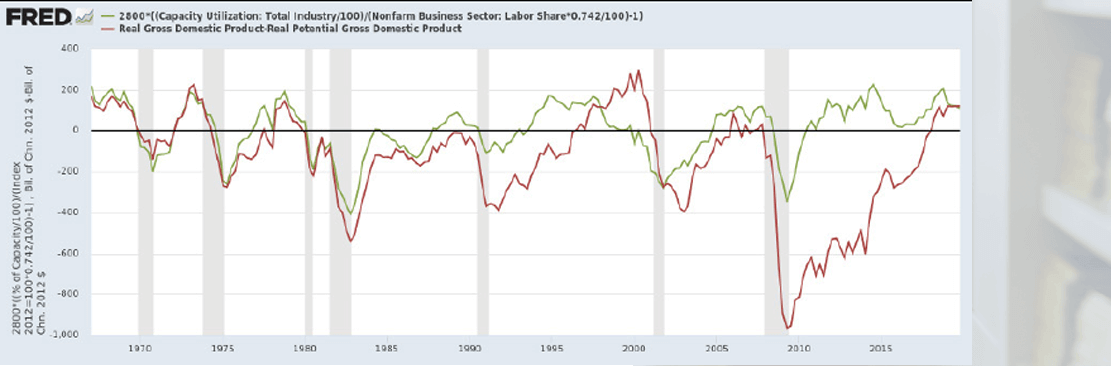
labor share. Here is a graph since 1967
of how my equation compared to the
official CBO calculation over time. My
equation is the green line. The CBO
calculation is the red line.
You can see from this graph that
after the 2008 recession, the CBO
showed a huge negative output gap.
It stayed negative until 2018 (10 years
later). This large negative output gap
gave the Federal Reserve (Central
Bank) of the United States reason to
keep interests rates low.
You can also see that my number
went negative at a standard level. Then
actually my number reached a positive output gap 2 years later and has stayed
moderately positive ever since. I had
the view that the CBO was wrong. I
stated for years that they would eventually
return to my calculation, which
they did at the beginning of 2019. Then,
throughout the 4 quarters of 2019 until
now, the CBO number has exactly
matched my number as the two lines
are now moving in unison.
I never changed my equation, while
the CBO adjusted their calculation
many times trying to figure out where
potential output was. In the end, CBO’s
number stabilized with my number.
My work here shows that even the
most complex concepts in economics
can be better explained with simple
correct equations.
This is how we break
paradigms at AIU.
At AIU you have the freedom to discover
and innovate new ideas.
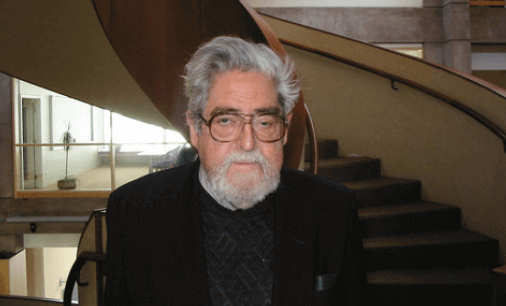 Louis Nirenberg (died last January,
at 94) was one of the most
outstanding analysts of the twentieth
century. He was a leader in most of
the important developments of the
theory of linear and nonlinear partial
differential equations, in particular,
elliptic equations, hypoelliptic equations
and their relation to the theory
of several complex variables, topological
and geometric methods, and
free boundary problems.
Louis Nirenberg had many students
and collaborators and inspired generations
of mathematicians. His generosity
and work will continue to have a
profound influence. In an interview in
the Notices of the AMS, April 2002, Nirenberg
said “One of the wonders of
mathematics is you go somewhere in
the world and you meet other mathematicians,
and it is like one big family.
This large family is a wonderful joy.”
Nirenberg was the Abel Prize recipient
together with John F. Nash Jr. in
2015 and received the prize “for striking
and seminal contributions to the
theory of nonlinear partial differential
equations and its applications to geometric
analysis.”
He was a frequent speaker and lecturer
at Fields Institute workshops and
seminars. ...
Louis Nirenberg (died last January,
at 94) was one of the most
outstanding analysts of the twentieth
century. He was a leader in most of
the important developments of the
theory of linear and nonlinear partial
differential equations, in particular,
elliptic equations, hypoelliptic equations
and their relation to the theory
of several complex variables, topological
and geometric methods, and
free boundary problems.
Louis Nirenberg had many students
and collaborators and inspired generations
of mathematicians. His generosity
and work will continue to have a
profound influence. In an interview in
the Notices of the AMS, April 2002, Nirenberg
said “One of the wonders of
mathematics is you go somewhere in
the world and you meet other mathematicians,
and it is like one big family.
This large family is a wonderful joy.”
Nirenberg was the Abel Prize recipient
together with John F. Nash Jr. in
2015 and received the prize “for striking
and seminal contributions to the
theory of nonlinear partial differential
equations and its applications to geometric
analysis.”
He was a frequent speaker and lecturer
at Fields Institute workshops and
seminars. ...
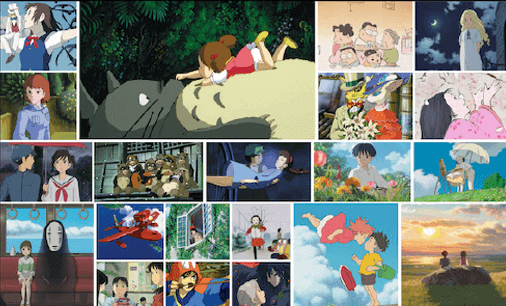 Hayao Miyazaki is reputed for his
distaste for electronic devices,
so it surprised fans when Netflix announced
it was releasing 21 Studio
Ghibli films to the masses via its
platform, which is created predominately
for mobile screens. To top it all
off, the movies have been subtitled in
28 languages and dubbed in up to 20
languages for the first time ever. ...
So, what happened? Studio Ghibli
cofounder and long-time friend of the
filmmaker, Toshio Suzuki, revealed
it all during a recent live talk event in
Tokyo’s Shibuya Ward.
Suzuki was reported by SoraNews24
to say, “Theaters and DVDs are important,
but I think distribution is also
important.” To convince Miyazaki,
who was less familiar with the idea of
digital distribution, to lift the unofficial
“ban,” he persuaded, “The money it
brings in can cover production costs
for your movie.”
As fans might be aware, Miyazaki
went out of retirement to start on one
last feature film. However, the process
is running longer than usual, and Suzuki
reasoned that this would require a
higher budget. “I told him this can cover
the production costs for that movie,”
Suzuki expressed. “When I said that,
he said, ‘Well, there’s nothing I can do,
then.’” ...
Read full text:
Hayao Miyazaki is reputed for his
distaste for electronic devices,
so it surprised fans when Netflix announced
it was releasing 21 Studio
Ghibli films to the masses via its
platform, which is created predominately
for mobile screens. To top it all
off, the movies have been subtitled in
28 languages and dubbed in up to 20
languages for the first time ever. ...
So, what happened? Studio Ghibli
cofounder and long-time friend of the
filmmaker, Toshio Suzuki, revealed
it all during a recent live talk event in
Tokyo’s Shibuya Ward.
Suzuki was reported by SoraNews24
to say, “Theaters and DVDs are important,
but I think distribution is also
important.” To convince Miyazaki,
who was less familiar with the idea of
digital distribution, to lift the unofficial
“ban,” he persuaded, “The money it
brings in can cover production costs
for your movie.”
As fans might be aware, Miyazaki
went out of retirement to start on one
last feature film. However, the process
is running longer than usual, and Suzuki
reasoned that this would require a
higher budget. “I told him this can cover
the production costs for that movie,”
Suzuki expressed. “When I said that,
he said, ‘Well, there’s nothing I can do,
then.’” ...
Read full text:
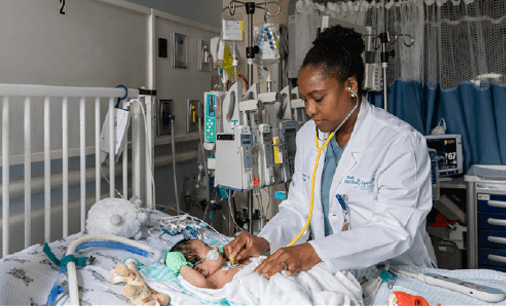 When Nathaly Sweeney launched
her career as a pediatric heart
specialist a few years ago, she says, it
was a struggle to anticipate which babies
would need emergency surgery or
when. ... “There was no rhyme or reason
who was coming to the intensive
care unit over and over again, versus
the ones that were doing well.”
Now, just a few years later, Sweeney
has at her fingertips the results of the
complete genome sequence of her
sickest patients in a couple of days.
That’s because of remarkable strides
in the speed at which genomes can be
sequenced and analyzed. Doctors who
treat newborns in the intensive care
unit are turning to this technology to
help them diagnose their difficult cases.
Sweeney sees her tiny patients in
the neonatal intensive care unit of
Rady Children’s Hospital in San Diego.
Doctors there can figure out what’s
wrong with about two-thirds of these
newborns without a pricey DNA test.
The rest have been medical mysteries.
“We had patients that were lying
here in the hospital for six or seven
months, not doing very well,” she says.
“The physicians would refer them for
rapid genome sequencing and would
diagnose them with something we
didn’t even think of!”
Rady’s Institute for Genomic Medicine
has now sequenced the genomes
of more than 1,000 newborns. ...
When Nathaly Sweeney launched
her career as a pediatric heart
specialist a few years ago, she says, it
was a struggle to anticipate which babies
would need emergency surgery or
when. ... “There was no rhyme or reason
who was coming to the intensive
care unit over and over again, versus
the ones that were doing well.”
Now, just a few years later, Sweeney
has at her fingertips the results of the
complete genome sequence of her
sickest patients in a couple of days.
That’s because of remarkable strides
in the speed at which genomes can be
sequenced and analyzed. Doctors who
treat newborns in the intensive care
unit are turning to this technology to
help them diagnose their difficult cases.
Sweeney sees her tiny patients in
the neonatal intensive care unit of
Rady Children’s Hospital in San Diego.
Doctors there can figure out what’s
wrong with about two-thirds of these
newborns without a pricey DNA test.
The rest have been medical mysteries.
“We had patients that were lying
here in the hospital for six or seven
months, not doing very well,” she says.
“The physicians would refer them for
rapid genome sequencing and would
diagnose them with something we
didn’t even think of!”
Rady’s Institute for Genomic Medicine
has now sequenced the genomes
of more than 1,000 newborns. ...
 A bizarre tentacled microbe discovered
on the floor of the Pacific
Ocean may help explain the origins of
complex life on this planet and solve
one of the deepest mysteries in biology,
scientists reported last January.
Two billion years ago, simple cells
gave rise to far more complex cells.
Biologists have struggled for decades
to learn how it happened. Scientists
have long known that there must have
been predecessors along the evolutionary
road. But to judge from the fossil
record, complex cells simply appeared
out of nowhere. The new species, called
Prometheoarchaeum, turns out to be
just such a transitional form, helping
to explain the origins of all animals,
plants, fungi —and, of course, humans.
The research was reported in the journal
Nature.
“It’s actually quite cool —it’s going
to have a big impact on science,” said
Christa Schleper, a microbiologist at
the University of Vienna who was not
involved in the new study.
Our cells are stuffed with containers.
They store DNA in a nucleus,
and generate fuel in compartments
called mitochondria. They destroy
old proteins inside tiny housekeeping
machines called lysosomes. ...
A bizarre tentacled microbe discovered
on the floor of the Pacific
Ocean may help explain the origins of
complex life on this planet and solve
one of the deepest mysteries in biology,
scientists reported last January.
Two billion years ago, simple cells
gave rise to far more complex cells.
Biologists have struggled for decades
to learn how it happened. Scientists
have long known that there must have
been predecessors along the evolutionary
road. But to judge from the fossil
record, complex cells simply appeared
out of nowhere. The new species, called
Prometheoarchaeum, turns out to be
just such a transitional form, helping
to explain the origins of all animals,
plants, fungi —and, of course, humans.
The research was reported in the journal
Nature.
“It’s actually quite cool —it’s going
to have a big impact on science,” said
Christa Schleper, a microbiologist at
the University of Vienna who was not
involved in the new study.
Our cells are stuffed with containers.
They store DNA in a nucleus,
and generate fuel in compartments
called mitochondria. They destroy
old proteins inside tiny housekeeping
machines called lysosomes. ...
 KFC Middle East has launched
special ‘NAPKINIZED’ serviettes
so customers can easily clean up after
scarfing down on fried chicken without
utensils.
Together with creative agency
TBWA\RAAD, the fast food chain
transformed its menus, posters, flyers
and cashier receipts into special inkresistant
napkins.
The duo used a customized UV
printer machine with bio-degradable
and eco-friendly ink formula, ensuring
the napkins are safe to use after
customers chow their food. The
‘NAPKINIZED’ serviettes will be rolled
out across the 87 chains in the UAE
and Lebanon. ...
KFC Middle East has launched
special ‘NAPKINIZED’ serviettes
so customers can easily clean up after
scarfing down on fried chicken without
utensils.
Together with creative agency
TBWA\RAAD, the fast food chain
transformed its menus, posters, flyers
and cashier receipts into special inkresistant
napkins.
The duo used a customized UV
printer machine with bio-degradable
and eco-friendly ink formula, ensuring
the napkins are safe to use after
customers chow their food. The
‘NAPKINIZED’ serviettes will be rolled
out across the 87 chains in the UAE
and Lebanon. ...
 Many of us take our abilities for
granted, and it can be easy to
overlook how having steady hands
makes everything from making lunch
to applying makeup super easy. But our
ability to flick an eyeliner wing, paint
on eyebrows hair by hair, or even comb
mascara through our lashes could one
day change. That’s what happened to
makeup artist Terri Bryant.
“Five years later, she was diagnosed
with Parkinson’s Disease, a nervous
system disorder that can cause tremors
and loss of balance, among other
symptoms. As soon as she received
her diagnosis, Bryant feared she might
completely lose her ability to apply
makeup due to shaking hands.
Her changing abilities have since
required her to rethink the tools she
uses to apply makeup. Many of her
traditional tools weren't providing the
stability she needed and knew was
achievable, so she starting meeting
with ergonomic experts and developing
her own. That research and
dedication resulted in Guide Beauty,
her new cosmetics brand.
The brand’s shining star is its eyeliner,
thanks to the unique tool Bryant
has developed for applying it. It comes
with a rounded-triangle-shaped pot
and lid, which are designed to help the
user grip and control it with ease. ...
Many of us take our abilities for
granted, and it can be easy to
overlook how having steady hands
makes everything from making lunch
to applying makeup super easy. But our
ability to flick an eyeliner wing, paint
on eyebrows hair by hair, or even comb
mascara through our lashes could one
day change. That’s what happened to
makeup artist Terri Bryant.
“Five years later, she was diagnosed
with Parkinson’s Disease, a nervous
system disorder that can cause tremors
and loss of balance, among other
symptoms. As soon as she received
her diagnosis, Bryant feared she might
completely lose her ability to apply
makeup due to shaking hands.
Her changing abilities have since
required her to rethink the tools she
uses to apply makeup. Many of her
traditional tools weren't providing the
stability she needed and knew was
achievable, so she starting meeting
with ergonomic experts and developing
her own. That research and
dedication resulted in Guide Beauty,
her new cosmetics brand.
The brand’s shining star is its eyeliner,
thanks to the unique tool Bryant
has developed for applying it. It comes
with a rounded-triangle-shaped pot
and lid, which are designed to help the
user grip and control it with ease. ...
 Designers Hsin-Jou Huang, Szu-
Ying Lai and Chia-Ning Hsu help
people with disabilities to fulfil their
sexual needs with a three-part masturbation
tool that includes a bodysuit,
a mask and a remote control.
The sex aid kit, called Ripple, is
designed for people with moderate
to severe functional limitations, who
require caregivers to assist them in
day-to-day tasks.
It works to stimulate all the senses,
including touch, sight, sound and
smell, through three different objects:
a cushioned, inflatable body suit, a remote
with a receiver, and an eye mask
with earphones, which also releases
pheromones. ...
Designers Hsin-Jou Huang, Szu-
Ying Lai and Chia-Ning Hsu help
people with disabilities to fulfil their
sexual needs with a three-part masturbation
tool that includes a bodysuit,
a mask and a remote control.
The sex aid kit, called Ripple, is
designed for people with moderate
to severe functional limitations, who
require caregivers to assist them in
day-to-day tasks.
It works to stimulate all the senses,
including touch, sight, sound and
smell, through three different objects:
a cushioned, inflatable body suit, a remote
with a receiver, and an eye mask
with earphones, which also releases
pheromones. ...
 Face-touching rewards us by relieving
momentary discomforts like
itches and muscle tension. These discomforts
usually pass within a minute,
but face-touching provides immediate
relief that eventually makes it a habitual
response that resists change. ...
1 Change habitual behaviors. The
first step in reducing face-touching
is becoming aware of it. Each time
you touch your face, notice the urge
or sensation that preceded it and the
situation you were in –what you were
doing, where you were physically or
what you were feeling emotionally. You
can write it down in a log.
2 Create new responses. When you
feel the urge to touch your face,
you can clench your fists, sit on your
hands, press your palms onto the tops of your thighs or stretch your arms
straight down at your sides. This competing
response should be inconspicuous
and use a position that can be held
for at least a minute. Use the competing
response for as long as the urge to
touch your face persists.
3 Manage your triggers. Changing
your environment can reduce your
urges to touch your face and your need
to use alternative responses. If your
glasses keep slipping off your nose,
you can use ear hooks or hair ties to
prevent slippage. Use your log to figure
out what situations or emotions are
associated with your face-touching.
Also: face it, you may not be able to
stop ...
Face-touching rewards us by relieving
momentary discomforts like
itches and muscle tension. These discomforts
usually pass within a minute,
but face-touching provides immediate
relief that eventually makes it a habitual
response that resists change. ...
1 Change habitual behaviors. The
first step in reducing face-touching
is becoming aware of it. Each time
you touch your face, notice the urge
or sensation that preceded it and the
situation you were in –what you were
doing, where you were physically or
what you were feeling emotionally. You
can write it down in a log.
2 Create new responses. When you
feel the urge to touch your face,
you can clench your fists, sit on your
hands, press your palms onto the tops of your thighs or stretch your arms
straight down at your sides. This competing
response should be inconspicuous
and use a position that can be held
for at least a minute. Use the competing
response for as long as the urge to
touch your face persists.
3 Manage your triggers. Changing
your environment can reduce your
urges to touch your face and your need
to use alternative responses. If your
glasses keep slipping off your nose,
you can use ear hooks or hair ties to
prevent slippage. Use your log to figure
out what situations or emotions are
associated with your face-touching.
Also: face it, you may not be able to
stop ...
 Seeing as our bodies contain more
cells belonging to microbes, such as
bacteria and yeasts, than human ones,
let’s start with the microbiome. “We
live in a symbiotic relationship with
our gut bacteria,” says Prof Arne Akbar,
the president of the British Society for
Immunology and a professor at University
College, London. “Anything we
do that alters that can be detrimental.”
Not only do our microbes form protective
barriers, they also programme our
immune systems. ... To feed your gut
flora, Cruickshank recommends “eating
a more varied diet with lots of highfibre
foods”. ... the more plant foods you
consume, the better. Kefir yoghurt and
pickles such as sauerkraut and kimchi
are among the fermented delicacies.
To be immunologically fit, you need
to be physically fit. “White blood cells
can be quite sedentary,” says Akbar.
“Exercise mobilises them by increasing
your blood flow, so they can do their
surveillance jobs and seek and destroy
in other parts of the body.”
Heavy drinking also depletes our
immune cells. “Some studies have
suggested that the first-line-of-defence
macrophages are not as effective in
people who have had a lot of alcohol,”
says Cruickshank.
Cruickshank says that vitamin D has
become a hot topic in immunology. “It
is used by our macrophages ...
Read full text:
Seeing as our bodies contain more
cells belonging to microbes, such as
bacteria and yeasts, than human ones,
let’s start with the microbiome. “We
live in a symbiotic relationship with
our gut bacteria,” says Prof Arne Akbar,
the president of the British Society for
Immunology and a professor at University
College, London. “Anything we
do that alters that can be detrimental.”
Not only do our microbes form protective
barriers, they also programme our
immune systems. ... To feed your gut
flora, Cruickshank recommends “eating
a more varied diet with lots of highfibre
foods”. ... the more plant foods you
consume, the better. Kefir yoghurt and
pickles such as sauerkraut and kimchi
are among the fermented delicacies.
To be immunologically fit, you need
to be physically fit. “White blood cells
can be quite sedentary,” says Akbar.
“Exercise mobilises them by increasing
your blood flow, so they can do their
surveillance jobs and seek and destroy
in other parts of the body.”
Heavy drinking also depletes our
immune cells. “Some studies have
suggested that the first-line-of-defence
macrophages are not as effective in
people who have had a lot of alcohol,”
says Cruickshank.
Cruickshank says that vitamin D has
become a hot topic in immunology. “It
is used by our macrophages ...
Read full text:
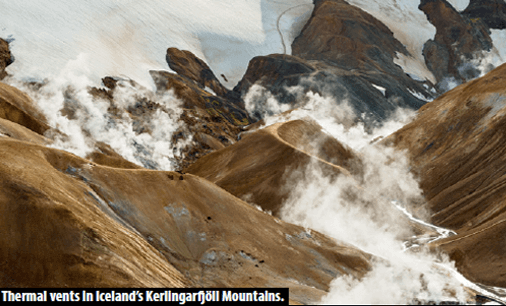
 Many of the world’s favorite food
and drinks could be fanning the
flames of malaria, according to a new
study. Products such as coffee, cocoa,
tobacco, tea, beef, soybeans, and palm
oil require huge amounts of land to
satisfy intense demand from developed
countries and help to fuel forest
clearing in many tropical regions of the
world. The environmental cost of deforestation
is fairly widely understood, but
what does it have to do with malaria?
Previous research has shown that
deforestation can help create the ideal
conditions for Anopheles mosquitoes
to thrive, the females of which
can pick up and spread the parasite
responsible for malaria. Deforestation
can help foster warmer environments
with fewer predators, the perfect setting
for mosquitos. Paired with this,
the chopping down of trees reduces
the absorption of water and exposes
more land to sunlight, creating an
increasing number of warm pools of
standing water that mosquitoes use for
breeding grounds.
Reported in the journal Nature
Communications, researchers from the
University of Sydney have assessed
how much the deforestation-driven
malaria risk can be attributed to
demand for widely traded commodities.
They estimate up to 20% of the
malaria risk to humans in deforestation
hotspots is driven by ...
Read full text:
Many of the world’s favorite food
and drinks could be fanning the
flames of malaria, according to a new
study. Products such as coffee, cocoa,
tobacco, tea, beef, soybeans, and palm
oil require huge amounts of land to
satisfy intense demand from developed
countries and help to fuel forest
clearing in many tropical regions of the
world. The environmental cost of deforestation
is fairly widely understood, but
what does it have to do with malaria?
Previous research has shown that
deforestation can help create the ideal
conditions for Anopheles mosquitoes
to thrive, the females of which
can pick up and spread the parasite
responsible for malaria. Deforestation
can help foster warmer environments
with fewer predators, the perfect setting
for mosquitos. Paired with this,
the chopping down of trees reduces
the absorption of water and exposes
more land to sunlight, creating an
increasing number of warm pools of
standing water that mosquitoes use for
breeding grounds.
Reported in the journal Nature
Communications, researchers from the
University of Sydney have assessed
how much the deforestation-driven
malaria risk can be attributed to
demand for widely traded commodities.
They estimate up to 20% of the
malaria risk to humans in deforestation
hotspots is driven by ...
Read full text:
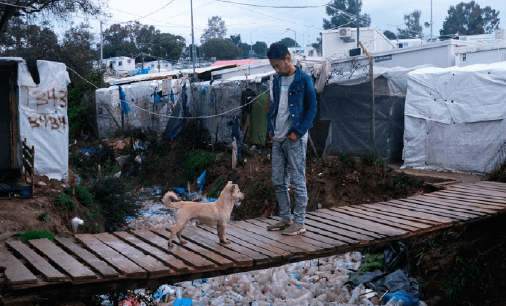 In the infamous Moria camp on the
Greek island of Lesbos, 26,000 migrants
eke out a desperate existence in
a facility built for just 2,800. The paths
are strewn with garbage and sewage
pipes burst often. Residents line up
for hours for a chance to shower, and
even then, there’s no hot water.
Families sleep cheek by jowl in tents.
Scabies, lice, and respiratory problems
are commonplace. It’s far from the
new life in Europe they hoped for —
and it’s the perfect breeding ground for
the coronavirus.
As COVID-19 threatens Moria, and
other camps like it in Europe and the
Middle East, aid agencies are scrambling
to prepare for what they fear will
be a devastating outbreak.
Concerns have grown so severe that
Doctors Without Borders called Thursday
(March 12) for Moria and others
on the Greek islands to be evacuated
immediately. Fears about the situation
have surged in recent days since
the first case of the coronavirus was
confirmed on Lesbos.
“In some parts of Moria camp there
is just one water tap for every 1,300
people, and no soap available,” said
Hilde Vochten, the organization’s
medical coordinator in Greece.
“Families of five or six have to sleep
in spaces of no more than three square
meters [32 square feet]. This means
that ...
Read full text:
In the infamous Moria camp on the
Greek island of Lesbos, 26,000 migrants
eke out a desperate existence in
a facility built for just 2,800. The paths
are strewn with garbage and sewage
pipes burst often. Residents line up
for hours for a chance to shower, and
even then, there’s no hot water.
Families sleep cheek by jowl in tents.
Scabies, lice, and respiratory problems
are commonplace. It’s far from the
new life in Europe they hoped for —
and it’s the perfect breeding ground for
the coronavirus.
As COVID-19 threatens Moria, and
other camps like it in Europe and the
Middle East, aid agencies are scrambling
to prepare for what they fear will
be a devastating outbreak.
Concerns have grown so severe that
Doctors Without Borders called Thursday
(March 12) for Moria and others
on the Greek islands to be evacuated
immediately. Fears about the situation
have surged in recent days since
the first case of the coronavirus was
confirmed on Lesbos.
“In some parts of Moria camp there
is just one water tap for every 1,300
people, and no soap available,” said
Hilde Vochten, the organization’s
medical coordinator in Greece.
“Families of five or six have to sleep
in spaces of no more than three square
meters [32 square feet]. This means
that ...
Read full text:
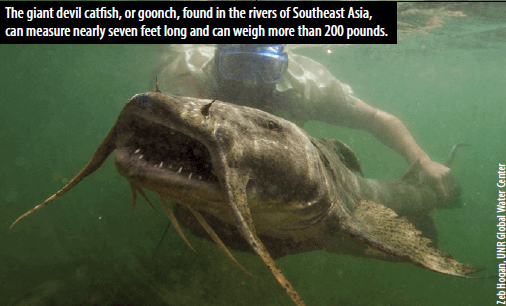 Some of the most astonishing
creatures on Earth hide deep in
rivers and lakes: giant catfish weighing
over 600 pounds, stingrays the length
of Volkswagen Beetles, six-foot-long
trout that can swallow a mouse whole.
There are about 200 species of
so-called freshwater megafauna,
but compared to their terrestrial and
marine counterparts, they are poorly
studied by scientists and little known
to the public. And they are quietly
disappearing.
Following an exhaustive survey
throughout the Yangtze River basin,
researchers this month declared the
Chinese paddlefish officially extinct.
The paddlefish, last seen alive in 2003, could grow up to 23 feet long and once
inhabited many of China’s rivers, but
overfishing and dams decimated their
populations. The paddlefish may be a
harbinger for many other giant fish. According
to research published in August
in Global Change Biology, freshwater
megafauna have declined by 88 percent
worldwide in recent years.
“This study is a first step,” said Zeb
Hogan, an aquatic ecologist at the
University of Nevada, Reno, and a coauthor
of the research. “We want to go
beyond just studying conservation status
and look at ways to try to improve
the situation for these animals.” ...
Read full text:
Some of the most astonishing
creatures on Earth hide deep in
rivers and lakes: giant catfish weighing
over 600 pounds, stingrays the length
of Volkswagen Beetles, six-foot-long
trout that can swallow a mouse whole.
There are about 200 species of
so-called freshwater megafauna,
but compared to their terrestrial and
marine counterparts, they are poorly
studied by scientists and little known
to the public. And they are quietly
disappearing.
Following an exhaustive survey
throughout the Yangtze River basin,
researchers this month declared the
Chinese paddlefish officially extinct.
The paddlefish, last seen alive in 2003, could grow up to 23 feet long and once
inhabited many of China’s rivers, but
overfishing and dams decimated their
populations. The paddlefish may be a
harbinger for many other giant fish. According
to research published in August
in Global Change Biology, freshwater
megafauna have declined by 88 percent
worldwide in recent years.
“This study is a first step,” said Zeb
Hogan, an aquatic ecologist at the
University of Nevada, Reno, and a coauthor
of the research. “We want to go
beyond just studying conservation status
and look at ways to try to improve
the situation for these animals.” ...
Read full text:
 Ultimate Ears’ biggest,
loudest, BOOMiest speaker yet, with
extreme bass and adaptive EQ.
www.ultimateears.com
Ultimate Ears’ biggest,
loudest, BOOMiest speaker yet, with
extreme bass and adaptive EQ.
www.ultimateears.com
 12 hole tenor ocarina about 6 inches long with a pitch range from
A4 to F6. Includes a free online instructional booklet, Zelda Songbook Volume One
and the newest Final Fantasy Songbook. www.stlocarina.com
12 hole tenor ocarina about 6 inches long with a pitch range from
A4 to F6. Includes a free online instructional booklet, Zelda Songbook Volume One
and the newest Final Fantasy Songbook. www.stlocarina.com
 Bags and backpacks. The Black Hole series
is now made from recycled products. www.patagonia.com
Bags and backpacks. The Black Hole series
is now made from recycled products. www.patagonia.com
 The Bachelor of Metallurgy Engineering
program objective is
to provide students with a thorough
grounding in the fundamentals that
would allow a graduate to function
effectively in industry or continue on
to graduate school. The Bachelor of
Metallurgy Engineering program is
offered online via distance learning.
After evaluating both academic record
and life experience, AIU staff working
in conjunction with Faculty and
Academic Advisors will assist students
in setting up a custom-made program,
designed on an individual basis. This
flexibility to meet student needs is seldom
found in other distance learning
programs. Our online program does
not require all students to take the
same subjects/courses, use the same
books, or learning materials. Instead,
the online Bachelor of Metallurgy
Engineering curriculum is designed
individually by the student and
academic advisor. It specifically addresses
strengths and weaknesses with
respect to market opportunities in the
student’s major and intended field of
work. Understanding that industry
and geographic factors should influence
the content of the curriculum
instead of a standardized one-fits-all
design is the hallmark of AIU’s unique
approach to adult education. This
philosophy addresses the dynamic and
constantly changing environment of
working professionals by helping adult
students in reaching their professional
and personal goals within the scope of
the degree program.
The Bachelor of Metallurgy Engineering
program objective is
to provide students with a thorough
grounding in the fundamentals that
would allow a graduate to function
effectively in industry or continue on
to graduate school. The Bachelor of
Metallurgy Engineering program is
offered online via distance learning.
After evaluating both academic record
and life experience, AIU staff working
in conjunction with Faculty and
Academic Advisors will assist students
in setting up a custom-made program,
designed on an individual basis. This
flexibility to meet student needs is seldom
found in other distance learning
programs. Our online program does
not require all students to take the
same subjects/courses, use the same
books, or learning materials. Instead,
the online Bachelor of Metallurgy
Engineering curriculum is designed
individually by the student and
academic advisor. It specifically addresses
strengths and weaknesses with
respect to market opportunities in the
student’s major and intended field of
work. Understanding that industry
and geographic factors should influence
the content of the curriculum
instead of a standardized one-fits-all
design is the hallmark of AIU’s unique
approach to adult education. This
philosophy addresses the dynamic and
constantly changing environment of
working professionals by helping adult
students in reaching their professional
and personal goals within the scope of
the degree program.
 Atlantic International University is accredited by the Accreditation Service for International
Schools, Colleges and Universities (ASIC). ASIC Accreditation is an internationally
renowned quality standard for colleges and universities. Visit ASIC’s Directory of Accredited
Colleges and Universities. ASIC is a member of CHEA International Quality Group
(CIQG) in the USA, an approved accreditation body by the Ministerial Department of the Home Office
in the UK, and is listed in the International Directory of the Council for Higher Education Accreditation
(CHEA). The University is based in the United States and was established by corporate charter in 1998.
Atlantic International University is accredited by the Accreditation Service for International
Schools, Colleges and Universities (ASIC). ASIC Accreditation is an internationally
renowned quality standard for colleges and universities. Visit ASIC’s Directory of Accredited
Colleges and Universities. ASIC is a member of CHEA International Quality Group
(CIQG) in the USA, an approved accreditation body by the Ministerial Department of the Home Office
in the UK, and is listed in the International Directory of the Council for Higher Education Accreditation
(CHEA). The University is based in the United States and was established by corporate charter in 1998.
 In some cases, accredited colleges
may not accept for transfer courses and degrees
completed at unaccredited colleges, and some
employers may require an accredited degree as
a basis for eligibility for employment. Potential
students should consider how the above may affect
their interests, AIU respects the unique rules and
regulations of each country and does not seek to
influence the respective authorities. In the event
that a prospective student wishes to carry out any
government review or process in regards to his
university degree, we recommend that the requirements
of such are explored in detail with the relevant
authorities by the prospective student as the
university does not intervene in such processes.
AIU students can be found in over 180 countries,
they actively participate and volunteer
in their communities as part of their academic
program and have allocated thousands of service
hours to diverse causes and initiatives. AIU
programs follow the standards commonly used by
colleges and universities in the United States with
regards to the following: academic program
structure, degree issued, transcript, and
other graduation documents.
AIU graduation documents can include
an apostille and authentication from the
US Department of State to facilitate their
use internationally.
In some cases, accredited colleges
may not accept for transfer courses and degrees
completed at unaccredited colleges, and some
employers may require an accredited degree as
a basis for eligibility for employment. Potential
students should consider how the above may affect
their interests, AIU respects the unique rules and
regulations of each country and does not seek to
influence the respective authorities. In the event
that a prospective student wishes to carry out any
government review or process in regards to his
university degree, we recommend that the requirements
of such are explored in detail with the relevant
authorities by the prospective student as the
university does not intervene in such processes.
AIU students can be found in over 180 countries,
they actively participate and volunteer
in their communities as part of their academic
program and have allocated thousands of service
hours to diverse causes and initiatives. AIU
programs follow the standards commonly used by
colleges and universities in the United States with
regards to the following: academic program
structure, degree issued, transcript, and
other graduation documents.
AIU graduation documents can include
an apostille and authentication from the
US Department of State to facilitate their
use internationally.
| Dr. Franklin Valcin President/Academic Dean |
Dr. José Mercado Chief Executive Officer Chairman of the Board of Trustees |
Ricardo González, PhD Provost |
| Dr. Ricardo Gonzalez Chief Operation Officer and MKT Director |
Linda Collazo Logistics Coordinator |
Dr. Silvia Restorff Academic Advisor |
| Dr. Miriam Garibaldi Viceprovost for Research |
Irina Ivashuk Alumni Association Coordinator |
Dr. Prakash Menon Academic Advisor |
| Clara Margalef Director of Special Projects of AIU |
Carlos Aponte Telecommunications Coordinator |
Dr. Nilani Ljunggren De Silva Academic Advisor |
| Juan Pablo Moreno Director of Operations |
David Jung Corporate/Legal Counsel |
Dr. Scott Wilson Academic Advisor |
| Paula Viera Director of Intelligence Systems |
Bruce Kim Advisor/Consultant |
Dr. Mohammad Shaidul Islam Academic Advisor |
| Felipe Gomez Design Director / IT Supervisor |
Thomas Kim Corporate/ Accounting Counsel |
Dr. Edgar Colon Academic Advisor |
| Daritza Ysla IT Coordinator |
Camila Correa Quality Assurance Coordinator |
Deborah Rodriguez Academic Tutor Coordinator |
| Nadeem Awan Chief Programming Officer |
Maricela Esparza Administrative Coordinator |
Cyndy Dominguez Academic Tutor Coordinator |
| Dr. Jack Rosenzweig Dean of Academic Affairs |
Chris Benjamin IT and Hosting Support |
Kinmberly Diaz Admissions Support Tutor |
| Dr. Edward Lambert Academic Director |
Mayra Bolivar Accounting Coordinator |
Amalia Aldrett Admissions Coordinator |
| Dr. Ariadna Romero Advisor Coordinator |
Roberto Aldrett Communications Coordinator |
Sandra Garcia Admissions Coordinator |
| Nadia Gabaldon Academic Coordinator |
Giovanni Castillo IT Support |
Jose Neuhaus Admissions Support |
| Jhanzaib Awan Senior Programmer |
Jaime Rotlewicz Dean of Admissions |
Junko Shimizu Admissions Coordinator |
| Leonardo Salas Human Resource Manager |
Dr. Mario Rios Academic Advisor |
Veronica Amuz Admissions Coordinator |
| Benjamin Joseph IT and Technology Support |
Michael Phillips Registrar’s Office |
Alba Ochoa Admissions Coordinator |
| Rosie Perez Finance Coordinator |
Rene Cordon Admissions Support |
Jenis Garcia Admissions Counselor |
| Chris Soto Admissions Counselor |
||
 The School of Business and Economics
allows aspiring and practicing
professionals, managers, and entrepreneurs
in the private and public sectors
to complete a self paced distance
learning degree program of the highest
academic standard.
The ultimate goal is to empower
learners and help them take advantage
of the enormous array of resources
from the world environment in order
to eliminate the current continuum of
poverty and limitations.
Degree programs are designed for
those students whose professional experience has been in business,
marketing, administration, economics,
finance and management.
The School of Business and Economics
allows aspiring and practicing
professionals, managers, and entrepreneurs
in the private and public sectors
to complete a self paced distance
learning degree program of the highest
academic standard.
The ultimate goal is to empower
learners and help them take advantage
of the enormous array of resources
from the world environment in order
to eliminate the current continuum of
poverty and limitations.
Degree programs are designed for
those students whose professional experience has been in business,
marketing, administration, economics,
finance and management.
 The School of Social and Human Studies
is focused on to the development of
studies which instill a core commitment
to building a society based on social and
economic justice and enhancing opportunities
for human well being.
The founding principles lie on the
basic right of education as outlined
in the Declaration of Human Rights.
We instill in our students a sense of
confidence and self reliance in their
ability to access the vast opportunities
available through information channels,
the world wide web, private, public,
nonprofit, and nongovernmental organizations in an ever expanding
global community.
Degree programs are aimed towards
those whose professional life has been
related to social and human behavior,
with the arts, or with cultural studies.
The School of Social and Human Studies
is focused on to the development of
studies which instill a core commitment
to building a society based on social and
economic justice and enhancing opportunities
for human well being.
The founding principles lie on the
basic right of education as outlined
in the Declaration of Human Rights.
We instill in our students a sense of
confidence and self reliance in their
ability to access the vast opportunities
available through information channels,
the world wide web, private, public,
nonprofit, and nongovernmental organizations in an ever expanding
global community.
Degree programs are aimed towards
those whose professional life has been
related to social and human behavior,
with the arts, or with cultural studies.
 The School of Science and Engineering
seeks to provide dynamic, integrated,
and challenging degree programs
designed for those whose experience
is in industrial research, scientific production,
engineering and the general
sciences. Our system for research and
education will keep us apace with the
twenty-first century reach scientific
advance in an environmentally and
ecologically responsible manner to allow
for the sustainability of the human
population. We will foster among our
students a demand for ethical behavior,
an appreciation for diversity, an understanding
of scientific investigation, knowledge of design innovation, a
critical appreciation for the importance
of technology and technological change
for the advancement of humanity.
The School of Science and Engineering
seeks to provide dynamic, integrated,
and challenging degree programs
designed for those whose experience
is in industrial research, scientific production,
engineering and the general
sciences. Our system for research and
education will keep us apace with the
twenty-first century reach scientific
advance in an environmentally and
ecologically responsible manner to allow
for the sustainability of the human
population. We will foster among our
students a demand for ethical behavior,
an appreciation for diversity, an understanding
of scientific investigation, knowledge of design innovation, a
critical appreciation for the importance
of technology and technological change
for the advancement of humanity.
 With access to a global catalog created and maintained collectively by more than
9,000 participating institutions, AIU students have secured excellent research
tools for their study programs.
With access to a global catalog created and maintained collectively by more than
9,000 participating institutions, AIU students have secured excellent research
tools for their study programs.